









10Life Financial Limited
Enquiries: enquiries@10life.com
Hotline: (852) 3705 1599
Address: 16/F Greatmany Centre, 109-115 Queen’s Road East, Wan Chai, Hong Kong



Which travel insurance benefits are affected by earthquakes?
Does travel insurance cover earthquakes?
What is a “known risk”?
Perhaps everyone has this question: as Japan experiences earthquakes frequently, does it already count as a “known risk”?
How does the Japan Meteorological Agency’s “Earthquake Advisory Information” affect travel insurance?
What situations will claims be denied?
Can a trip to Japan be cancelled and compensated for due to an earthquake?
Is it still useful to buy travel insurance after an earthquake has occurred?
When should travel insurance be purchased to be valid?
How do I make a claim for earthquake travel insurance?
Frequently Asked Questions


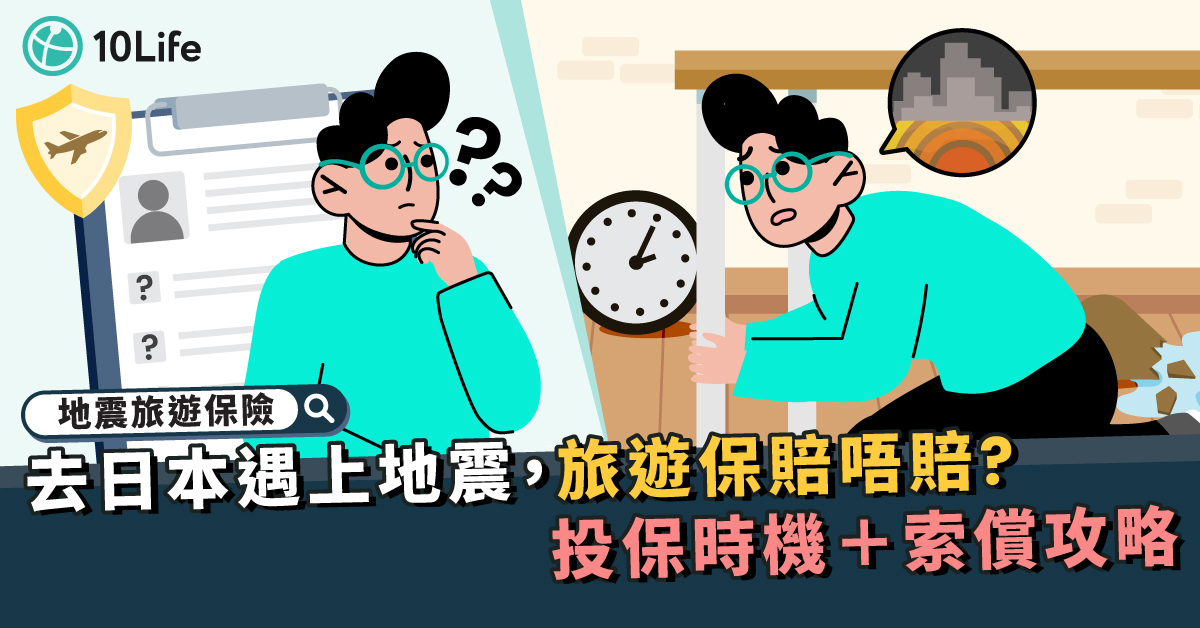
According to recent information from the Japan Meteorological Agency, a 7.4-magnitude earthquake struck the north-eastern coastal area of Japan on 20 April, briefly prompting a tsunami warning. Some areas recorded an intensity of lower 5, and strong tremors were also felt in Tokyo and elsewhere. Authorities have also warned that the probability of a massive earthquake of magnitude 8 or above occurring within the next week is 10 times higher than usual, urging people in the affected areas to strengthen their disaster preparedness.
For travellers heading to Japan, the key question is: if an earthquake does happen, will travel insurance be useful? If flights and hotels have already been booked, can they be cancelled and compensated?
In fact, most travel insurance policies cover earthquakes, but the key issue is whether the event is regarded as a “known risk”, and whether you purchased cover in advance. If you only take out insurance after news of the earthquake has already emerged, or even after a travel warning has been issued, there is a very high chance that related losses will not be compensated.
In this article, 10Life takes a detailed look at the scope of earthquake cover under travel insurance, the best time to buy, and what to note when making a claim.
Which travel insurance benefits are affected by earthquakes?
Travel insurance covers trip, transport and medical losses arising from earthquakes, mainly including:
Trip cancellation or curtailment: If you are unable to depart or need to return to Hong Kong early because of an earthquake, non-refundable flight, hotel and activity costs may be reimbursed
Flight delay or cancellation: If your flight is affected and reaches the specified delay period (e.g. 5–6 hours), cash compensation or additional accommodation and transport expenses may be covered
Overseas medical expenses and emergency evacuation: If you are injured in an earthquake, medical expenses are generally covered, and emergency medical transport or repatriation arrangements may also be provided
The actual scope of cover and compensation limits vary between policies. Before purchasing, you may compare travel insurance on 10Life.
Does travel insurance cover earthquakes?
Generally, travel insurance covers earthquakes under natural disaster protection, but whether a claim is successful usually depends on the following conditions:
If the insurance is purchased only after an earthquake has occurred, the insurer may regard the earthquake as a “known risk”, and compensation will generally not be available.
What is a “known risk”?
“Known risk” refers to an event that has already occurred or can reasonably be foreseen at the time of taking out insurance. For example:
Perhaps everyone has this question: as Japan experiences earthquakes frequently, does it already count as a “known risk”?
Generally speaking, an insurer will not regard travel to an earthquake-prone area as a known risk solely on that basis; rather, it depends on:
Therefore, the key point is whether “that particular earthquake has already occurred or been widely reported”, as travel insurance primarily covers unforeseen events rather than risks that have already arisen.
How does the Japan Meteorological Agency’s “Earthquake Advisory Information” affect travel insurance?
As regards this incident, after the earthquake on 20 April, the Japan Meteorological Agency issued a “Hokkaido and Sanriku Offshore Subsequent Earthquake Advisory”, warning that the risk of an earthquake of magnitude 8 or above occurring within the following week had risen significantly compared with normal levels. Whether such an “official risk warning” affects travel insurance depends on how the insurer defines a “known risk”.
In general, this may be understood in two situations:
The key point is that insurers do not all define “known risk” in exactly the same way. Therefore, 10Life recommends that if you plan to travel or buy insurance during the relevant warning period, you should confirm with the insurer before purchase:
Where possible, ask the insurer to provide written confirmation or a recorded confirmation, so that it can be used as a reference when making a claim in future.
What situations will claims be denied?
Many people assume that having travel insurance means they are fully covered, but in reality, many claims are unsuccessful, often due to some common circumstances.
If an earthquake had already occurred before the policy was taken out, the event is generally regarded as a “known risk”, and any related losses are usually not covered.
Even if the trip has not yet started, if the destination has already been severely affected and the traveller still chooses to travel, this may also be regarded as voluntarily assuming the risk. Taking Japan as an example, as of now, the Hong Kong Government has not issued outbound travel alerts for most areas (with only Fukushima Prefecture under a Yellow Outbound Travel Alert), but the Security Bureau has issued a safety notice reminding members of the public to pay attention to local conditions. Under the terms of some individual policies, such information may also affect whether a claim will be paid.
Can a trip to Japan be cancelled and compensated for due to an earthquake?
Yes, but the conditions must be met. If an earthquake occurs after you have purchased the insurance and it materially affects your trip (for example, flight cancellation or damage at your destination), you can generally claim for non-refundable expenses. However, it must be a case of “forced cancellation”, rather than simply choosing not to go.
For example:
If you cancel simply out of concern, without any actual impact on the trip, compensation is usually not available.
Is it still useful to buy travel insurance after an earthquake has occurred?
If an earthquake has already occurred, or if travel insurance is purchased only after the related damage has been widely reported, losses arising from that earthquake will generally not be covered. This is because insurance is intended to protect against unforeseen risks that have not yet occurred. Therefore, if you plan to travel to areas such as Japan where earthquakes occur more frequently, you should purchase travel insurance as early as possible.
When should travel insurance be purchased to be valid?
When it comes to insurance, timing is often more important than the coverage itself.
It is generally recommended to purchase travel insurance immediately after booking your flight or hotel. This ensures that, throughout the entire trip, all potential risks remain unknown and the coverage can take full effect.
By contrast, many people only consider buying insurance after seeing news of an earthquake, or even leave it until just before departure. The risk with this approach is that, once an event has been widely reported, the insurer may regard it as a known risk, which could affect claims. Therefore, the earlier you purchase travel insurance, the more complete the protection.
How do I make a claim for earthquake travel insurance?
Generally speaking, whether the required documents are complete when making a claim will directly affect the processing speed and the approval outcome.
Common documents required include:
The basic claims process is generally as follows:
Please note that the above is only a general process and list of document requirements. The claims procedure, required documents and time limits may vary between insurers or products, and the terms of the individual policy should prevail. After an incident, you should retain all relevant supporting documents as early as possible and submit your claim within the period specified in the policy, so as not to affect the progress or outcome of the claim.

Frequently Asked Questions
Losses caused by the earthquake may not be covered, but other losses not caused by the earthquake may still be covered. This is because the earthquake is already a “known risk”, so the related losses may fall outside the scope of cover.
Not necessarily. Whether you are covered depends on the policy terms and the alert level. However, if you only buy the policy after an alert has been issued, the chances of a successful claim are usually lower.
It depends on whether the overall trip is actually affected. If your flight, transport or itinerary is disrupted by the earthquake, there may still be no cover even if the destination itself is not in the worst-affected area.
Generally, no. Travel insurance mainly covers situations where you are “forced to cancel”, rather than decisions made based on personal preference or concerns about risk.
Generally speaking, most travel insurance policies cover flight delays or cancellations caused by severe weather such as typhoons or blizzards. However, conditions must be met, and the policy must be purchased before the severe weather occurs. If you only buy the policy after a weather warning has been issued, it may be treated as a “known risk” and not be compensated.
This English version of this article has been generated by machine translation powered by AI. It is provided solely for reference purposes. In the event of any discrepancy or inconsistency between this translation and the original Chinese version, the Chinese version shall prevail.
Last updated: 18 Jun 2026

有超過10年寫作經驗,喜歡從生活文化的角度切入思考,因此擅長把艱澀的保險內容,對應到日常經驗中,化繁為簡,讓大家一睇就明。經常與10Life的顧問及產品團隊合作,共同構思主題與內容。
有超過10年寫作經驗,喜歡從生活文化的角度切入思考,因此擅長把艱澀的保險內容,對應到日常經驗中,化繁為簡,讓大家一睇就明。經常與10Life的顧問及產品團隊合作,共同構思主題與內容。
10Life Product Comparison and 10Life Insurance Ratings are developed by 10Life Financial Limited, an authorised insurance broker company licensed with the Insurance Authority under License Number FB1526. 10Life Product Comparison and 10Life Insurance Ratings are developed for generic customer segments using mathematical calculations based on product information, facts and data, and are not influenced by any partnerships with or fees received from insurance companies. Any information on 10Life Platform ("10Life Information"), including but not limited to Product Comparison, Product Ratings, Blog Articles are intended for general education purpose and reference only. None of the 10Life Information is intended, nor should they be considered or relied upon, as regulated advice, insurance, financial, investment or professional advice, recommendation, approval, endorsement, invitation or solicitation in respect of any insurance, financial or investment products. 10Life Information does not take into account your individual needs. Reading 10Life Information should not be considered as conducting a suitability assessment, and is not sufficient to form the basis of any decisions to purchase any insurance products. You should rely on information authorised by insurance companies, carry out your own research and/or seek independent advice from licensed intermediaries before purchasing any insurance products or making any insurance decisions. While reasonable effort is used when collecting, validating and updating 10Life Information from various channels, none of 10Life Group and its subsidiaries, affiliates, agents, directors, officers and employees will be responsible for any liability, claim or loss arising from or associated with you using 10Life Information. No warranty, representation or guarantee is given by 10Life Group and its subsidiaries on the accuracy, completeness and timeliness of the information. If you have any questions on 10Life Product Comparison and 10Life Insurance Ratings, please email us at enquiries@10life.com




 Talk to 10Life on WeChat
