









10Life Financial Limited
Enquiries: enquiries@10life.com
Hotline: (852) 3705 1599
Address: 16/F Greatmany Centre, 109-115 Queen’s Road East, Wan Chai, Hong Kong



How should you choose Japan travel insurance? Start by paying attention to a few key areas of cover.
Travelling to Japan can make you more prone to falling ill? Medical coverage may be more important than you think
Does Japan ski travel insurance cover it?
Does Japan travel insurance for high-risk activities cover skydiving, marathons and Mount Fuji? The answer may not be the same
Does the Japan Earthquake Travel Insurance cover it?
Do you need to purchase a separate insurance policy for self-drive travel insurance for Japan?
Can I purchase standard travel insurance for a trip to Japan for an exchange programme, study tour or Working Holiday?
10Life Viewpoint: Don’t compare premiums only
Common Questions About Japan Travel Insurance


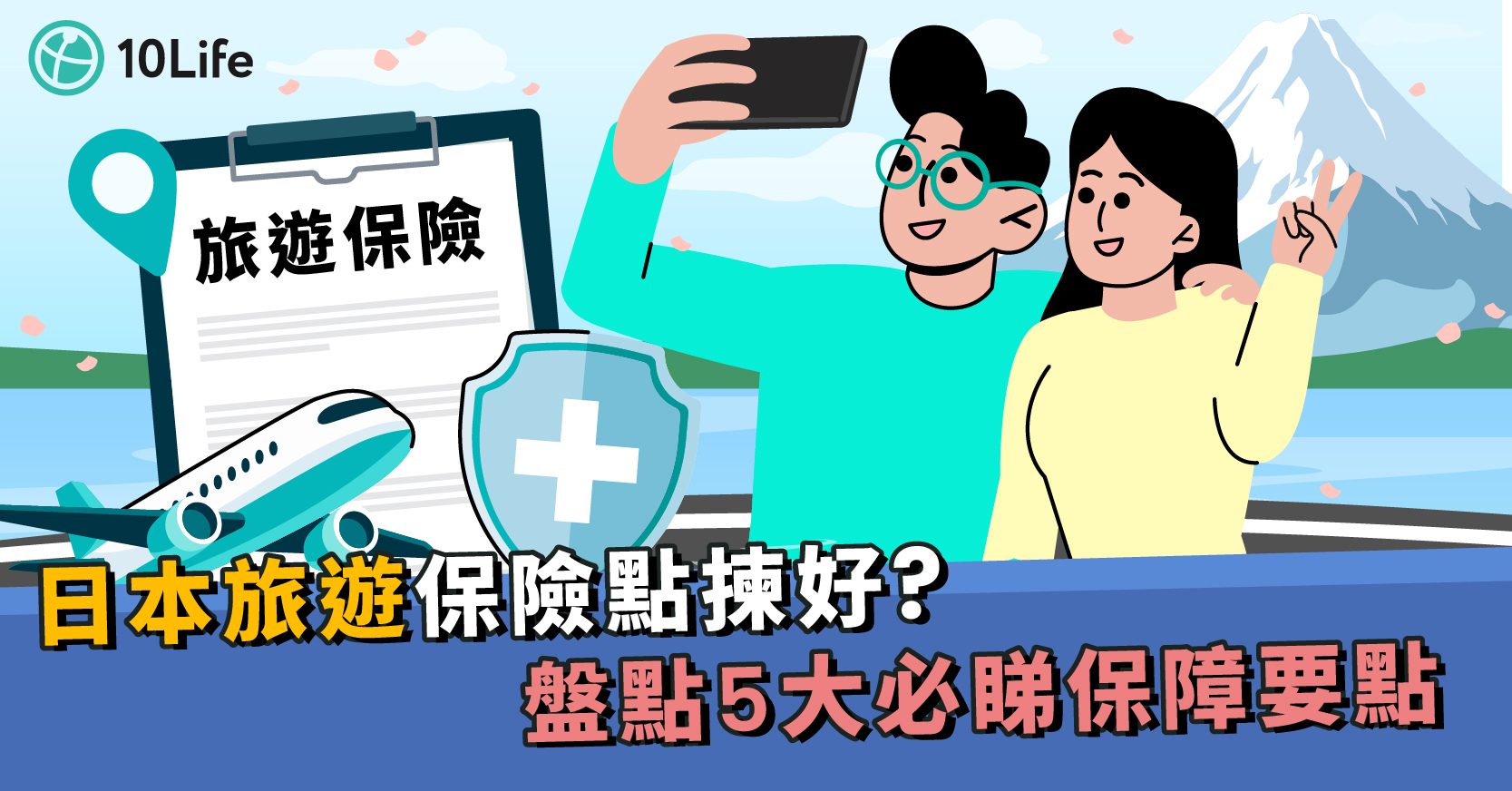
When travelling to Japan, many Hong Kong people already treat it like “going back home”, and it is not unusual to visit several times a year. However, when buying travel insurance, many people first compare only the price, but when something actually goes wrong, the real issue is often not whether they have bought it, but whether the coverage includes what they need.
In particular, when travelling to Japan in recent years, the itinerary is no longer limited to shopping, hot springs and cherry blossom viewing. Skiing, self-drive trips, climbing Mount Fuji, marathon running, and even activities such as skydiving and paragliding have become increasingly common. In addition, Japan has seen occasional cases of influenza, norovirus and other infections in recent years, so falling ill suddenly during a trip is more common than many expect.
This time, 10Life has compiled the key coverage points you must know for travel insurance for Japan, as well as common questions about skiing, self-drive trips, high-risk activities and earthquakes, to help everyone choose the coverage that best suits them more easily before departure.
How should you choose Japan travel insurance? Start by paying attention to a few key areas of cover.
When comparing Japan travel insurance, many people first look at the price, but the scope of cover is often more worth paying attention to. In particular, medical expenses in Japan are not cheap, and different types of travel may also affect your insurance needs.
Generally, you may first note the following:
Travel insurance may seem simple, but many claims disputes actually arise from overlooking some easily missed details.
Travelling to Japan can make you more prone to falling ill? Medical coverage may be more important than you think
When buying travel insurance, many people are most concerned about flight delays or lost baggage. In reality, one of the situations in which insurance is most often needed during a trip is illness.
In recent years, Japan has occasionally seen cases of infection such as influenza, norovirus and gastroenteritis. Coupled with cold winter weather, a packed itinerary and changes in eating habits, many travellers have experienced fever, stomach upset and dehydration.
Even for something as common as a cold or acute gastroenteritis, seeing a doctor in Japan may not be cheap. Consultation, A&E and even hospitalisation can easily cost from several thousand to tens of thousands of Hong Kong dollars.
Therefore, when comparing travel insurance, it is not advisable to compare premiums alone. You should also note:
When you are travelling, what is most worrying is not falling ill on holiday, but discovering that your cover is inadequate when you are in an unfamiliar place.
Taking my own experience as an example, last year I went on a 4-day, 3-night short trip to Fukuoka, Japan. After several days of eating and drinking heavily, I started to develop a sore throat on the third day, so I saw a doctor locally. I initially thought it was just a minor discomfort, but to my surprise, by the day before I was due to return to Hong Kong, I was feeling increasingly unwell. The day after I returned, I developed severe ear pain. After seeking medical treatment, I learned that the bacterial infection had spread to my ear, causing otitis media.
In the end, I saw a specialist three times in total. It took about two months for my ear to fully recover, and the overall medical expenses came to nearly HK$10,000. However, because I had already fallen ill in Japan during the trip and had purchased travel insurance, the related medical expenses and follow-up treatment costs after returning to Hong Kong were ultimately fully reimbursed, saving me a considerable amount.
Does Japan ski travel insurance cover it?
Skiing in Hokkaido is a must-do winter trip for many Hong Kong people, but even if a policy states that high-risk activities are covered, this does not mean all skiing situations are insured.
Many travel insurance policies only cover activities within designated ski resort areas. If you ski off-piste, or take part in competitions or professional activities, you may not be covered.
In addition, many policies also impose altitude limits, generally around 5,000 metres. Therefore, if your trip involves skiing, in addition to checking whether there is “high-risk activity cover”, it is also advisable to read the policy terms carefully.
Further reading: 【Skiing Travel Insurance】Is skiing injury-prone? How do you make a claim? (Includes exclusive travel insurance rating)
Does Japan travel insurance for high-risk activities cover skydiving, marathons and Mount Fuji? The answer may not be the same
In recent years, many travellers have taken part in activities such as skydiving, paragliding, bungee jumping and diving in Hokkaido or rural areas. However, high-altitude activities have always been an area that insurers handle with particular caution.
Some Hong Kong travel insurance policies only provide cover subject to specific conditions, for example:
If the activity is professional, competitive, or exceeds the specified altitude limit, it may be classified as an exclusion.
In recent years, many Hong Kong travellers have flown to Japan specifically to take part in events such as the Tokyo Marathon. Many insurers provide cover for amateur sports, but the usual condition is that they are non-professional, non-occupational and non-elite competitive in nature.
In other words, amateur categories may be covered, but professional-level events may not be included. If you are taking part in a professional marathon, you will need to purchase marathon-related insurance.
Mount Fuji has become a must-do item on many travellers’ bucket lists in recent years. As Mount Fuji is about 3,776 metres above sea level, which is generally below the common 5,000-metre limit found in many policies, ordinary hiking activities are usually likely to be covered.
However, if the activity involves:
additional cover may be required, or you may even need to purchase mountaineering insurance in Japan.
Does the Japan Earthquake Travel Insurance cover it?
When travelling to Japan, another common concern is earthquakes. After a major earthquake in Japan, many travellers are most concerned about whether booked flights and hotels can be cancelled, and whether travel insurance will pay out.
Generally speaking, most travel insurance policies provide cover for injuries, medical expenses or unexpected incidents caused by earthquakes during the trip.
However, if it involves cancelling a trip, the key factor is usually not whether there was an earthquake, but whether the event has already become a “Known Risk”. If an incident has already been announced before you take out the policy, a travel warning has already been issued, or the destination is already known to be affected, losses incurred after purchasing insurance may not be covered.
Therefore, if your travel plans are confirmed, it is generally advisable to take out insurance as early as possible.
Further reading: [Earthquake Travel Insurance] If you encounter an earthquake in Japan, will travel insurance pay? Best time to buy and claims guide
Do you need to purchase a separate insurance policy for self-drive travel insurance for Japan?
Self-drive travel in regions such as Hokkaido and Okinawa is very popular. However, many travellers assume that buying travel insurance means all car rental risks are covered, but this is not necessarily the case.
Car rentals in Japan generally include basic motor insurance, but in the event of an accident, travellers may still need to pay the “excess” and other additional charges, such as CDW, SCDW or NOC (Non-Operation Charge).
Most travel insurance policies in Hong Kong mainly cover the rental car excess, i.e. the portion that remains payable by the traveller after the rental company’s insurance takes effect. They do not directly replace motor insurance.
Therefore, before departure, it is advisable to check the following at the same time:
Further reading: 【Japan Self-Drive Guide 2026】12 key things Hong Kong drivers should know when self-driving in Japan
Can I purchase standard travel insurance for a trip to Japan for an exchange programme, study tour or Working Holiday?
Many people think that as long as the stay is short, such as for an exchange programme, study tour or Working Holiday of within 3 months, they can simply buy a standard travel insurance policy. In fact, travel insurance usually only covers trips with “pure travel” as the purpose, and generally does not cover study tours or working holidays.
If your trip to Japan involves an exchange programme, study or Working Holiday, even if the stay is not long, the scope of cover may still be different.
For example, standard travel insurance may not include:
If you are undertaking long-term study, a study tour or a Working Holiday, it is advisable to choose a relevant insurance plan, such as “Overseas Study Insurance” or “Working Holiday Insurance”.
10Life Viewpoint: Don’t compare premiums only
The most common mistake when comparing Japan travel insurance is focusing only on the price. This is especially true for skiing, self-drive trips, hiking and high-risk activities, where different companies may vary greatly in their definitions of high-risk activities, excesses and coverage scope. A premium that is a few dozen dollars cheaper may not make much difference; what really matters is whether the cover suits your travel style.
For more travel insurance information, please refer to 10Life’s travel insurance comparison, and use the actuary rating system to choose the insurance product that best suits your needs.
Common Questions About Japan Travel Insurance
It is generally recommended to purchase cover as soon as you have confirmed your flights and hotel booking. This is because certain benefits, such as trip cancellation cover, are only valid if the policy is taken out before the incident occurs. If you wait until after an earthquake, typhoon, or travel warning has been issued, it may be regarded as a “known risk”.
If you only travel once or twice a year, a single-trip travel insurance policy is usually sufficient; however, if you travel overseas six times or more a year, annual travel insurance may be more cost-effective.
Insurers will generally not automatically classify a destination as a “known risk” simply because it is located in an earthquake zone. The key factor is usually whether a specific incident has already occurred, and whether the event has affected travel arrangements.
In other words, the fact that Japan is prone to earthquakes does not mean cover will necessarily be excluded; what normally affects coverage is whether an earthquake has already occurred, has been widely reported, or whether a travel warning has already been issued. Travel insurance is primarily designed to cover unexpected events, rather than risks that have already materialised.
This English version of this article has been generated by machine translation powered by AI. It is provided solely for reference purposes. In the event of any discrepancy or inconsistency between this translation and the original Chinese version, the Chinese version shall prevail.
Last updated: 18 Jun 2026
有超過10年寫作經驗,喜歡從生活文化的角度切入思考,因此擅長把艱澀的保險內容,對應到日常經驗中,化繁為簡,讓大家一睇就明。經常與10Life的顧問及產品團隊合作,共同構思主題與內容。
有超過10年寫作經驗,喜歡從生活文化的角度切入思考,因此擅長把艱澀的保險內容,對應到日常經驗中,化繁為簡,讓大家一睇就明。經常與10Life的顧問及產品團隊合作,共同構思主題與內容。
10Life Product Comparison and 10Life Insurance Ratings are developed by 10Life Financial Limited, an authorised insurance broker company licensed with the Insurance Authority under License Number FB1526. 10Life Product Comparison and 10Life Insurance Ratings are developed for generic customer segments using mathematical calculations based on product information, facts and data, and are not influenced by any partnerships with or fees received from insurance companies. Any information on 10Life Platform ("10Life Information"), including but not limited to Product Comparison, Product Ratings, Blog Articles are intended for general education purpose and reference only. None of the 10Life Information is intended, nor should they be considered or relied upon, as regulated advice, insurance, financial, investment or professional advice, recommendation, approval, endorsement, invitation or solicitation in respect of any insurance, financial or investment products. 10Life Information does not take into account your individual needs. Reading 10Life Information should not be considered as conducting a suitability assessment, and is not sufficient to form the basis of any decisions to purchase any insurance products. You should rely on information authorised by insurance companies, carry out your own research and/or seek independent advice from licensed intermediaries before purchasing any insurance products or making any insurance decisions. While reasonable effort is used when collecting, validating and updating 10Life Information from various channels, none of 10Life Group and its subsidiaries, affiliates, agents, directors, officers and employees will be responsible for any liability, claim or loss arising from or associated with you using 10Life Information. No warranty, representation or guarantee is given by 10Life Group and its subsidiaries on the accuracy, completeness and timeliness of the information. If you have any questions on 10Life Product Comparison and 10Life Insurance Ratings, please email us at enquiries@10life.com



 Talk to 10Life on WeChat
